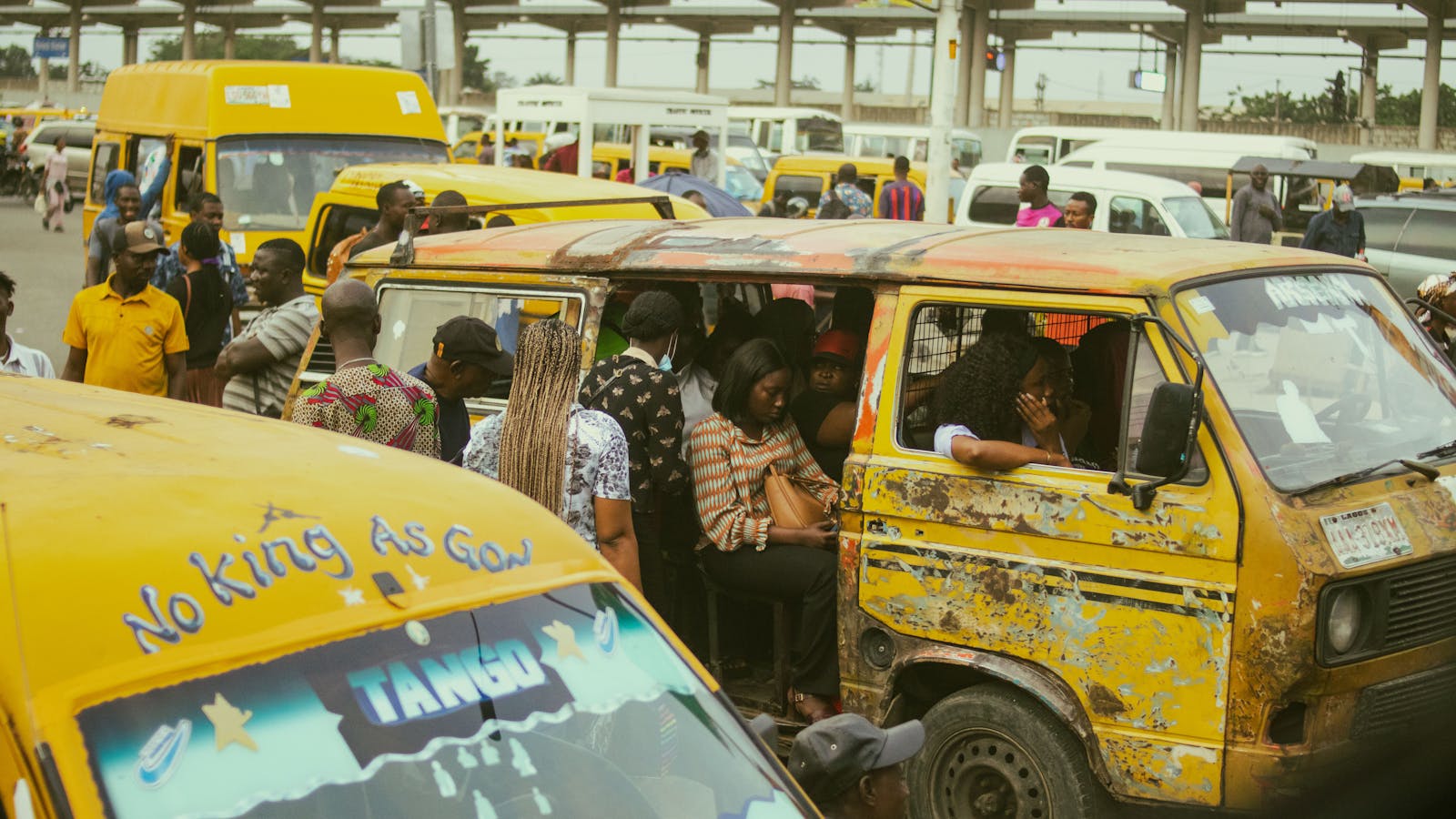
Why transport is the second-biggest Lagos cost
After rent, transport is the next-largest line item for most Lagos earners. It eats 8–15% of income for commuters, more if you live far from work. Every fuel price hike ripples instantly: danfo fares go up, Bolt surges, even BRT raises.
And unlike rent — which you pay once a year and move on — transport is a daily, grinding expense. It compounds. Skipping a ₦500 increase per trip saves ₦10,000 a month. That's a savings account contribution.
This guide breaks down what each option really costs in 2026, and gives you 9 concrete tricks to cut your bill without quitting your job or moving house.
The 8–12% transport rule
For a Lagos earner with a normal commute, transport should sit at 8–12% of take-home pay. Under 8% means you're lucky (short commute, remote-first, or heavy walker). Over 12% means your commute is eating your savings.
| Transport % of income | Assessment | What it means |
|---|---|---|
| Under 8% | Excellent | Short commute or hybrid/remote. Protect this. |
| 8–12% | Healthy | Normal daily Lagos commuter band. |
| 12–18% | Stretched | Bolt-heavy or long commute. Optimise routes. |
| Over 18% | Risk zone | Move closer, change mode, or negotiate remote days. |
Real 2026 fares: danfo, BRT, Bolt, okada
Danfo (yellow commercial buses)
- Short trips (1 stop): ₦300–₦500
- Medium trips (Ketu to Yaba): ₦700–₦1,200
- Longer routes (Ikorodu to Obalende): ₦1,500–₦2,500
- Rain or rush hour: fares swing 50–100% upward
BRT (Bus Rapid Transit)
- Short routes: ₦400–₦700
- Cross-Lagos routes (Ikorodu to CMS): ₦900–₦1,400
- Cowry card top-up minimum: ₦1,000
- Fixed pricing — doesn't surge in rain, which is its superpower
LBS Blue Line / Red Line train
- Blue Line (Marina to Mile 2): ₦750 per trip
- Red Line (Agbado to Oyingbo): ₦650–₦1,250 depending on stops
- Same Cowry card as BRT — so you don't need a second system
Bolt / Uber / Indrive
- Short rides (5–8km): ₦2,500–₦4,500 base
- Medium rides (10–15km): ₦4,500–₦8,000 base
- Long / cross-Lagos (20km+): ₦8,000–₦18,000 base
- Rush hour / rain surge: 1.3x to 2.5x multiplier
- Indrive often lands 15–30% cheaper if you're willing to negotiate
Okada (where legal) and Keke
- Okada short hop: ₦300–₦700
- Keke (tricycle) short hop: ₦200–₦500
- Legal zones have shrunk — Lagos Island, Ikoyi, and VI banned okada. Mainland enforcement varies.
Rule of thumb: Bolt is typically 3–5x the cost of danfo/BRT for the same route. Replace two Bolt rides a week with BRT and you save ₦40,000+ a month.
What a Lagos commute actually costs
Here's the monthly math for a typical round-trip commute (20 work days, two rides per day).
| Commute mode | Per day | Per month (20 days) |
|---|---|---|
| Danfo both ways | ₦1,400 | ₦28,000 |
| BRT both ways | ₦1,800 | ₦36,000 |
| Bus + keke last-mile | ₦2,400 | ₦48,000 |
| Bolt both ways (standard) | ₦10,000 | ₦200,000 |
| Bolt mornings + BRT evenings | ₦5,900 | ₦118,000 |
| Own car (fuel + parking + maintenance share) | ₦6,500–₦9,500 | ₦130,000–₦190,000 |
The gap between the cheapest and most expensive commute is nearly ₦170,000/month. That's the entire savings budget of many earners — decided purely by how you move around.
9 tricks to cut your transport bill
- Get a Cowry card and pre-load it. BRT + train are capped pricing, rain-proof, and faster than danfo on the dedicated lanes.
- Compare Bolt, Uber, and Indrive every single trip. The same 8km ride can vary by ₦2,000. Don't default to one app.
- Avoid peak surge windows. Leaving 30 minutes earlier or 45 minutes later can cut a ₦7,500 ride to ₦4,200.
- Combine short rides. Two ₦3,500 Bolts back-to-back = ₦7,000. One trip with a stop = ₦4,800.
- Negotiate remote days. Two work-from-home days saves 40% of your monthly commute. Worth raising with your manager.
- Carpool with one colleague. Split Bolt + parking. Halves your cost instantly.
- Use BRT for morning, Bolt only for evening if needed. Hybrid routing is how most smart Lagosians do it.
- Keep your trips category honest. Airport Bolts, owambe rides, and weekend errands belong under Transport too — not "entertainment."
- Audit after every month. If you spent ₦65,000 and planned ₦40,000, figure out which 5 trips broke the budget and fix next month.
Is owning a car cheaper?
Usually not, unless you drive a lot. The real monthly cost of a car in Lagos is not just fuel — it's also maintenance, insurance, tyres, and the occasional LASTMA encounter.
| Car cost item | Monthly estimate | Notes |
|---|---|---|
| Fuel (daily commute) | ₦60,000–₦100,000 | Depends on distance + traffic |
| Maintenance (averaged) | ₦20,000–₦40,000 | Service, tyres, small repairs |
| Insurance | ₦5,000–₦15,000 | Third party vs comprehensive |
| Parking / tolls | ₦5,000–₦15,000 | Third Mainland Bridge, VI parking |
| Big repairs buffer | ₦10,000–₦25,000 | Set aside — always happens |
| Total | ₦100,000–₦195,000 | Before loan / depreciation |
Buying a car makes financial sense when you're doing multiple long trips daily, carrying family, or your commute is 30km+ each way. Otherwise, BRT + selective Bolt is cheaper, and you skip the stress of potholes and LASTMA.
Track it with Owo Planner
Owo Planner's Transport category is built for Lagos patterns — danfo runs, Bolt trips, fuel, airtime top-ups for keke. Log every trip for a month and you'll instantly see which 3 habits are breaking your budget.
Build your Lagos budget in 5 minutes
Free. No bank connection. No subscription. Just enter your income and start planning.
Start Planning Free →