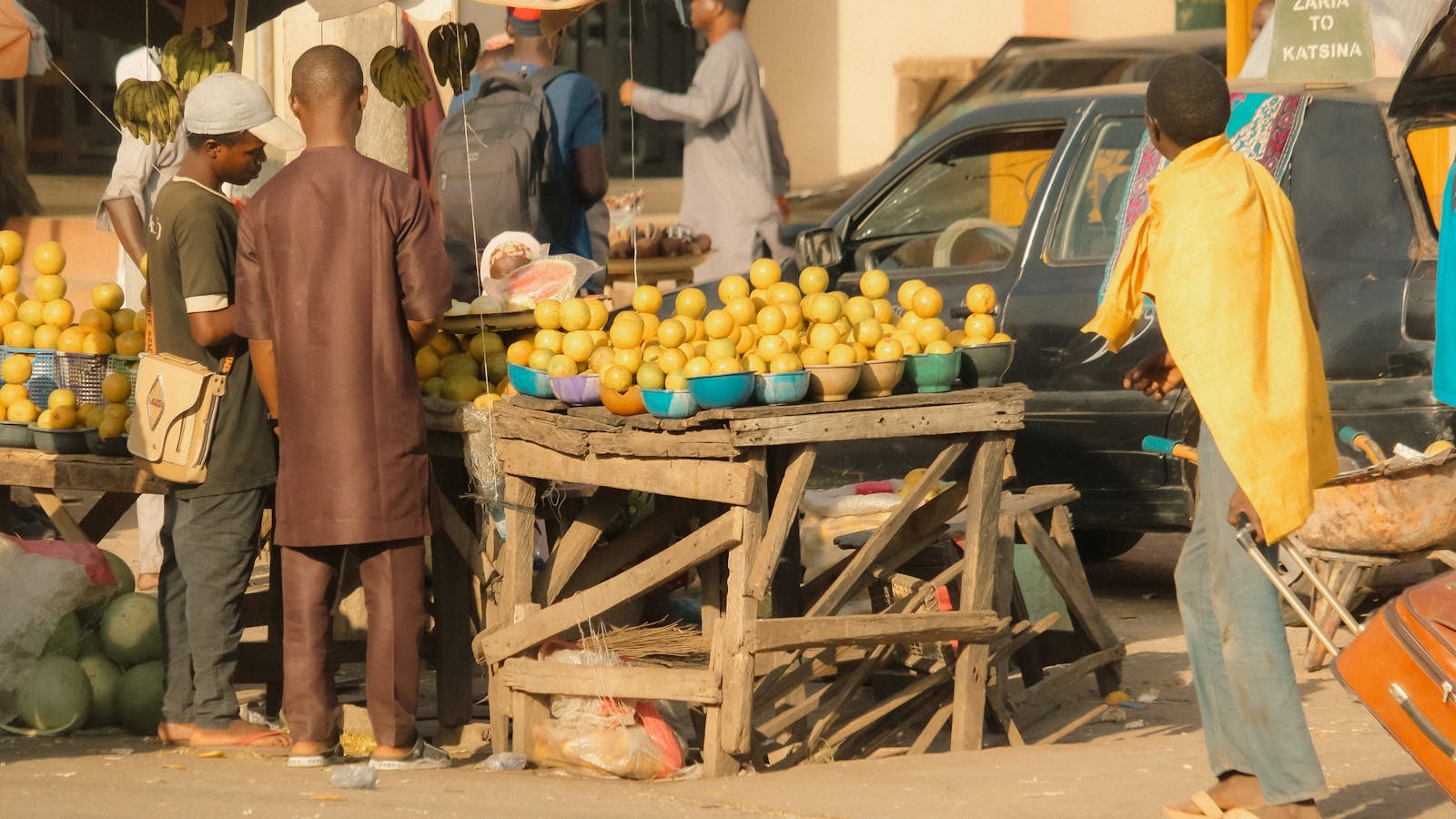
Why food is harder to budget in Lagos
Food inflation in Nigeria has outpaced almost every other expense category for the past three years. A bag of rice that cost ₦38,000 in early 2024 can hit ₦85,000–₦95,000 in 2026 depending on the brand. A basket of tomatoes at Mile 12 swings from ₦8,000 in harvest season to ₦35,000+ during scarcity.
That volatility is why most people underbudget for food. You set a number in January, then March arrives with tomato scarcity or a fuel price hike, and suddenly you're ₦20,000 over.
A Lagos food budget needs two things Western templates don't teach: a monthly baseline based on current market prices, and a buffer for price shocks. This guide gives you both.
The 15–20% food rule
For Lagos earners, food should sit between 15% and 20% of take-home income for a single person cooking most meals at home. If you live with family, eat out regularly, or have dependents, push that closer to 22–25%.
| Food % of income | Assessment | What it means |
|---|---|---|
| Under 15% | Lean | Cooking at home, market-first shopping. Sustainable if you enjoy it. |
| 15–20% | Healthy | Good mix of home cooking and occasional eating out. |
| 20–25% | Stretched | Heavy eating out or large household. Review where it's going. |
| Over 25% | Risk zone | Food is eating your savings. Time for a market audit. |
Rule of thumb: if you earn ₦400,000/month, aim for ₦60,000–₦80,000 on food. If you earn ₦150,000, aim for ₦22,000–₦30,000 — which means almost zero eating out.
Real 2026 Lagos food prices
Prices below are a realistic snapshot for early 2026 at mainland markets (Mile 12, Ketu, Oyingbo). Supermarket prices (ShopRite, Justrite) typically run 20–40% higher for the same items.
| Item | Market price | Supermarket price |
|---|---|---|
| Rice (50kg bag) | ₦78,000–₦90,000 | ₦95,000–₦105,000 |
| Garri (white, 4L) | ₦3,500–₦4,500 | ₦5,500–₦6,500 |
| Beans (honey, 4L) | ₦6,000–₦7,500 | ₦8,500–₦10,000 |
| Yam (big tuber) | ₦6,000–₦9,000 | ₦10,000–₦13,000 |
| Beef (1kg) | ₦5,500–₦7,000 | ₦7,500–₦9,500 |
| Chicken (1 whole) | ₦7,000–₦11,000 | ₦9,500–₦14,000 |
| Frozen fish (titus, 1kg) | ₦4,500–₦6,000 | ₦6,500–₦8,500 |
| Palm oil (5L) | ₦12,000–₦15,000 | ₦16,000–₦19,000 |
| Vegetable oil (5L) | ₦14,000–₦17,000 | ₦18,000–₦22,000 |
| Tomatoes (basket) | ₦10,000–₦25,000 | N/A (pay per kg) |
| Eggs (crate of 30) | ₦5,500–₦6,800 | ₦6,500–₦7,500 |
| Bread (family loaf) | ₦2,000–₦2,800 | ₦2,500–₦3,500 |
| Noodles (carton of 40) | ₦12,000–₦15,000 | ₦14,000–₦17,000 |
One takeaway: the supermarket premium is real. If you shop 100% at ShopRite, expect to spend 25–35% more than someone buying the same items at Mile 12 or Oyingbo.
Monthly food budgets by income
These templates assume a single person cooking most meals at home with a moderate eating-out habit (2–4 times per month).
₦150,000/month earner
| Category | Amount | Notes |
|---|---|---|
| Monthly market haul | ₦15,000 | Foodstuff, vegetables, protein |
| Weekly top-ups | ₦6,000 | ₦1,500/week for fresh items |
| Eating out / delivery | ₦3,000 | 1–2 times max |
| Buffer | ₦2,000 | Price shocks |
| Total | ₦26,000 | 17% of income |
₦400,000/month earner
| Category | Amount | Notes |
|---|---|---|
| Monthly market haul | ₦35,000 | Bulk foodstuff + protein |
| Weekly top-ups | ₦12,000 | ₦3,000/week |
| Eating out / delivery | ₦18,000 | 4–6 times a month |
| Office lunches / snacks | ₦5,000 | Work-day food |
| Buffer | ₦4,000 | Price shocks |
| Total | ₦74,000 | 18.5% of income |
₦1,000,000/month earner
| Category | Amount | Notes |
|---|---|---|
| Monthly market haul | ₦60,000 | Premium groceries mix |
| Weekly top-ups | ₦24,000 | ₦6,000/week |
| Eating out / delivery | ₦60,000 | Restaurants, brunches |
| Office lunches / snacks | ₦12,000 | Work-day food |
| Buffer | ₦10,000 | Price shocks + guests |
| Total | ₦166,000 | 16.6% of income |
Market vs supermarket: where to buy what
The smartest Lagos shoppers split their list. You don't have to pick one. Buy bulk staples at the market where the premium is huge — then use supermarkets for convenience items.
Buy at the market
- Rice, beans, garri, yam — 20–40% cheaper in bulk
- Fresh tomatoes, pepper, onions — sometimes 3x cheaper in-season
- Meat and fish — ask a regular butcher to cut to order
- Palm oil and cooking oil — 25–35% cheaper in 5L jerry cans
- Seasonings and spices — Mile 12 vs ShopRite is night and day
Buy at the supermarket
- Branded noodles, cereal, milk — similar prices, better freshness
- Frozen vegetables and ready meals — limited at market stalls
- Toiletries and household items — sometimes cheaper than open market
- Baby food and specialty items — authenticity matters
Time vs money: if you value your Saturday mornings, shop online from vendors like GoMarket or PricePally — delivery fees are typically ₦1,500–₦3,000 and you still save vs ShopRite.
Eating out in Lagos
A full meal in Lagos in 2026 ranges widely:
- Mama Put / Buka: ₦1,500–₦3,500 per meal
- Chicken Republic / Tantalizers: ₦3,000–₦5,500 per meal
- Casual restaurants (Mainland): ₦5,500–₦9,000 per meal
- Island restaurants (mid-tier): ₦10,000–₦20,000 per meal
- Fine dining (VI, Lekki): ₦25,000+ per person
Delivery apps (Chowdeck, Bolt Food, Glovo) add 15–25% on top of restaurant prices once you include service charges and delivery. Four deliveries a week at ₦5,000 each is ₦80,000/month — for one person.
7 tricks to cut your food bill
- Do a monthly market haul. One big shop at Mile 12 or Oyingbo beats four small supermarket runs.
- Cook in batches. A pot of stew can last 2 weeks frozen. You waste less and order less takeout.
- Buy in-season produce. Tomatoes in April cost 3x what they cost in November. Adjust your menu.
- Bring food to work. ₦5,000/day on office lunch = ₦100,000/month. That's a rent payment.
- Set a "deliveries per week" cap. Two max. Track it. Chowdeck is a savings leak.
- Join a foodstuff group-buy. A few friends pooling ₦100,000 at Mile 12 unlocks wholesale pricing.
- Audit after every month. Look at what you actually spent vs planned. Adjust next month's baseline.
Track it with Owo Planner
Owo Planner has a dedicated Food & Groceries category calibrated to Lagos prices. Log your market run, your deliveries, and your buka trips — and see exactly what your real food ratio is at month end.
Build your Lagos budget in 5 minutes
Free. No bank connection. No subscription. Just enter your income and start planning.
Start Planning Free →